Vectron combines the best of both worlds
Locomotive can switch between pure electric and Cummins diesel power with HVO capability
By Cummins Europe, Global Power Technology Leader
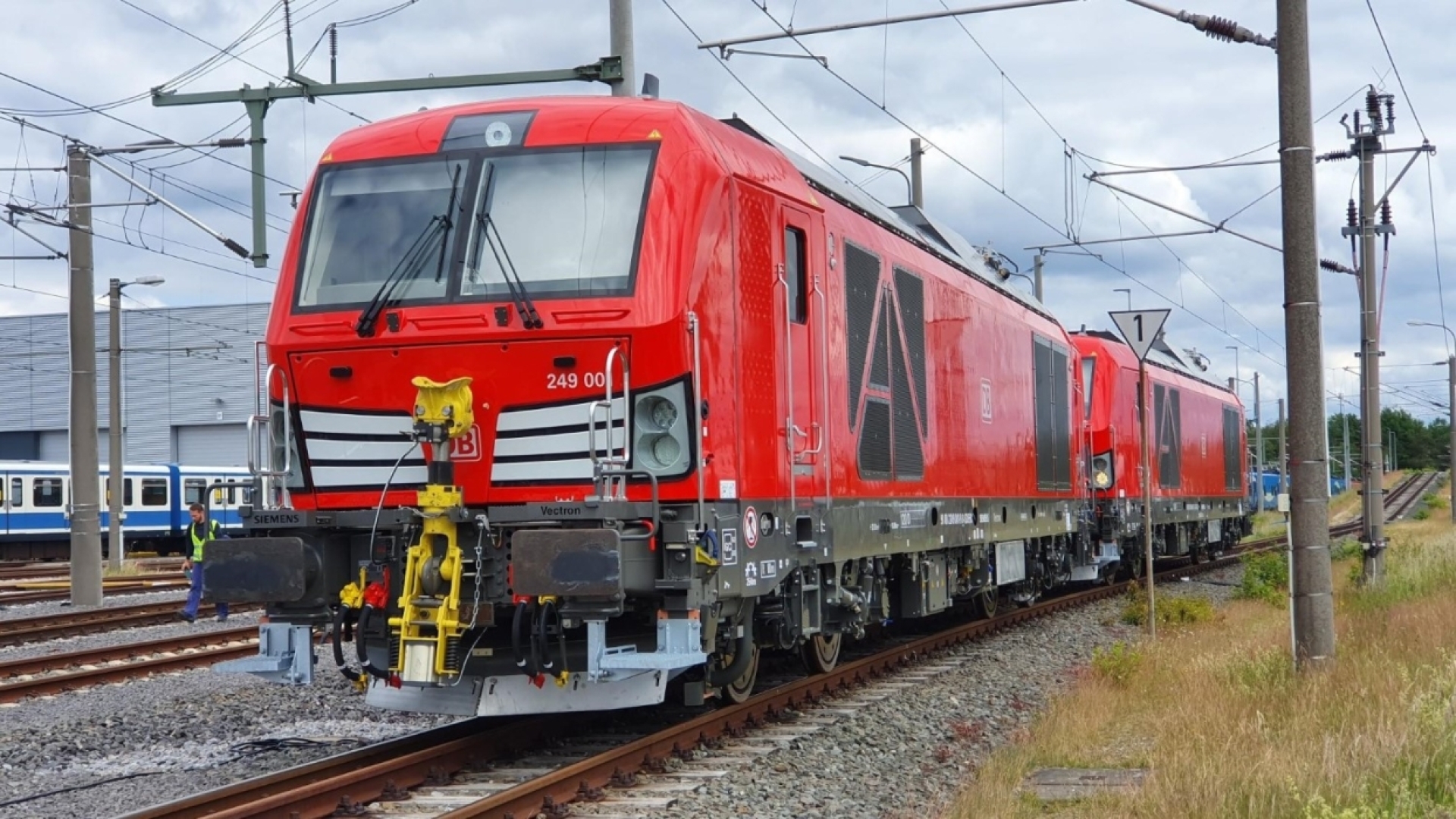
Siemens Mobility’s pioneering Vectron Dual Mode locomotive is expected to play a huge role in reducing carbon emissions generated by the European rail sector in the coming years.
The Vectron Dual Mode Light can be operated with both electric power and – courtesy of the Cummins Stage V QST30 – diesel power. The QST30 can also run on hydrotreated vegetable oil (HVO), a key requirement from freight operator giant Deutsche Bahn (DB) Cargo, which has ordered 146 of the locomotives. The dual-mode locomotive seamlessly transitions between electric and diesel power, eliminating the need to switch locomotives for electrified and non-electrified routes.
DB Cargo estimates the Vectron will save around 12 million litres of fuel and reduce CO2 emissions by something like 25,000 tonnes per year.
The DB Cargo locomotive comes with a power of 2,210 kW in catenary mode and 750 kW in autonomous mode, the locomotive has a maximum speed of 120 kmh and a starting tractive effort of 300 kN.
The Vectron Dual Mode light is a member of the Vectron family. The pure electric Vectron locomotives can be delivered for operating with alternating current (AC) or direct current (DC) power systems as well as multisystem (MS) variants in the power classes 5.2 MW, 5.6 MW and 6.4 MW.
To date, Siemens Mobility says it has sold more than 2,600 locomotives of the Vectron family to 103 customers in 16 countries, and the fleet has already accumulated over 1,000 million kilometres in service.
Locomotives using the Vectron platform are currently approved for operation in 20 European countries. They will be deployed for both freight and passenger service.
Along with the desired national train control system, the locomotives, which are built in the Siemens Mobility plant in Munich-Allach, can also be equipped with the latest European Train Control System (ETCS).
The Vectron is able to run on several corridors throughout Europe. Latest corridor approval has been for operating along the Scandinavian Corridor which extends from Austria to Norway via Germany, Denmark and Sweden. This enables both freight and passenger trains to run along the entire corridor without changing locomotives.
The Vectron is the first ETCS-equipped locomotive allowed to operate across the 16 km long Öresund connection (bridge and tunnel) between Sweden and Denmark.
Andreas Dammann, Rail Business Manager EMEA for Cummins and in charge of the Vectron project, said InnoTrans 2024 had been a fantastic showcase for Vectron Dual Mode Light and made possible by the shared effort of Cummins, Siemens Mobility and DB Cargo.
“The locomotive actually hauled all rolling vehicles to the exhibition before going on display, which sent a strong message about its capability, and the train driver said he thought Vectron was, in his words, a paradigm shift for the rail freight business.”
Andreas said Vectron was a classic example of how original equipment manufacturers in the rail sector were tackling the journey toward a sustainable future.
“The rail industry has shown itself to be an early adopter of energy transition technologies, second only to the automotive sector. But getting to zero emissions is not a toggle switch; it’s a journey where new technology slowly but steadily replaces conventional technology."
“Vectron Dual Mode Light is a fantastic step in the right direction and a great example of Cummins and Siemens working together to create carbon-reducing solutions.”
How dual-mode works
Dual-mode diesel electric locomotives are a cutting-edge technology that combines the efficiency of electric power and the flexibility of diesel.
When operating on electrified tracks, the locomotive draws power from the overhead catenary wires. This mode of operation is highly efficient, with zero in-use emissions and low operating costs.
On non-electrified tracks, the locomotive switches to diesel power. The diesel engine drives a generator, which in turn powers the electric motor. This allows the locomotive to operate on any track, regardless of electrification.
The locomotive's control system seamlessly switches between electric and diesel modes depending on the operating conditions.
This flexibility is particularly valuable for routes which are not fully electrified, allowing for efficient and uninterrupted service.
This article is part of the 2025 Edition Cummins Europe Magazine, to read more European articles click here:
Author Profiles
Cummins Europe, Global Power Technology Leader
Cummins Inc. opened its first site in Europe in 1956. Today it has 12 manufacturing sites and more than 10,800 employees in the region. Cummins works hard to provide advanced technologies supported by a long-established service network across Europe. Cummins is committed to investing in Europe through Research and Technology, ensuring Cummins’ technical experts are developing innovations of the future.
Related Tags