How natural gas fuel quality affects CNG truck engines
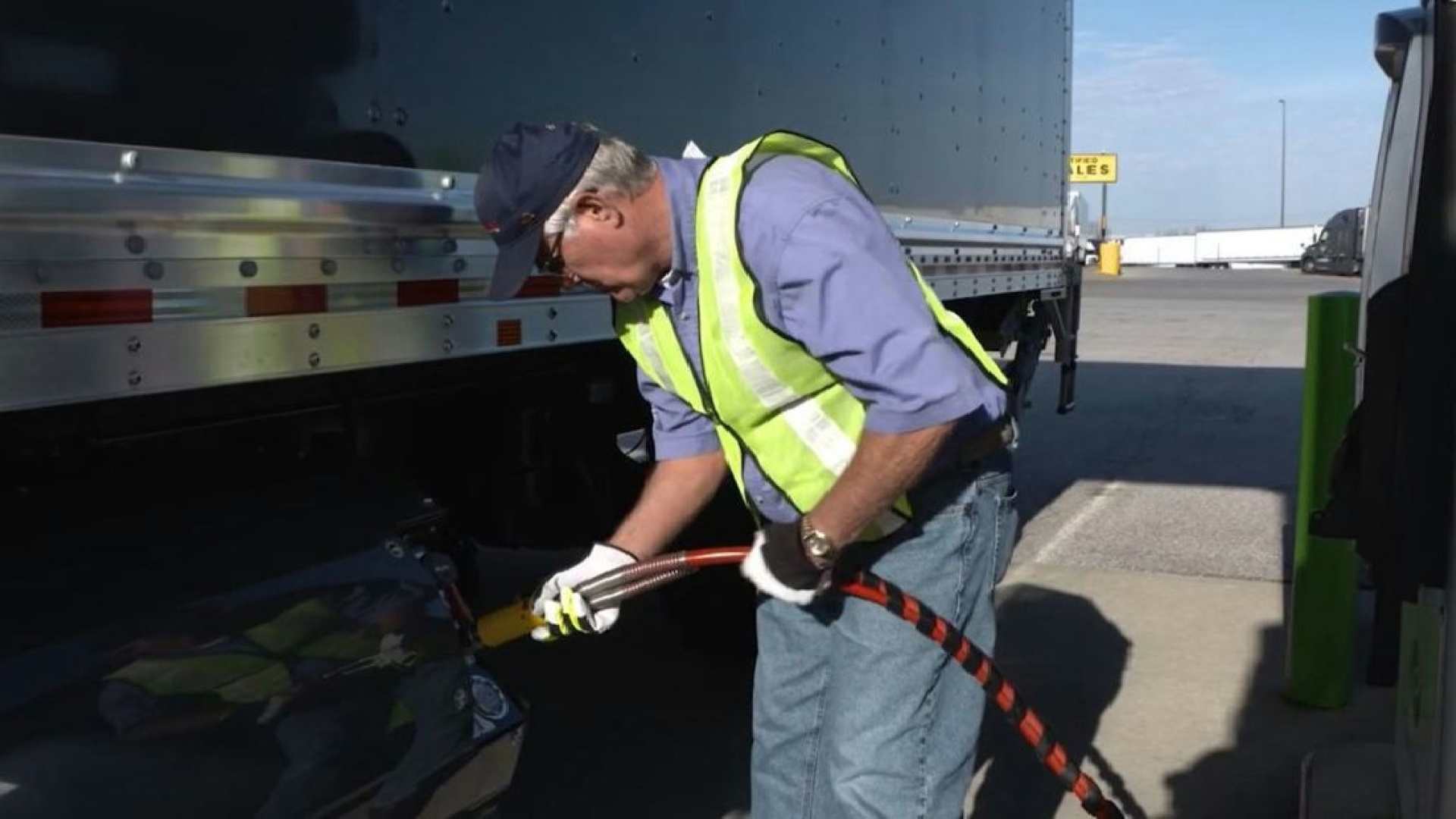
Just as diesel and gasoline quality are monitored, so is natural gas for Cummins' long lineup of engines that use the low-cost, clean-burning fuel.
Along with American Society for Testing and Materials (ASTM) natural gas standards, Cummins has developed its own fuel standards for various engines and applications.
Cummins customers unfamiliar with a natural gas supplier or concerned about fuel quality are encouraged to have that supplier test the fuel using Cummins' Natural Gas Analysis Tool.
Cummins service technicians also may test gas in the field if they suspect it is not meeting company engineering standards.
As U.S. natural gas supplies continue to reach historic levels, more fleets and owner-operators are turning to Cummins natural gas engines, including the 15-liter X15N. Customers have reported lower fuel costs while maintaining the power and performance their operations require.
Cummins works closely with natural gas suppliers and their customers to help ensure the fuel meets engine requirements.
“It's really pretty high quality out there,” David King, Business Development Manager for Cummins Technologies, said of natural gas in the U.S., Canada and Mexico.
But as with any engine fuel, King said fuel suppliers, fleet managers and drivers should all do their part to be on the lookout for fuel-related issues.
Natural gas suppliers are on the front lines using ASTM testing methods to determine overall fuel composition. Impurities such as water, oil, hydrogen sulfides, carbon dioxide and other content that can affect performance are removed before the gas is injected into pipelines for distribution across the country.
Underground pipelines deliver natural gas to fueling stations that use compressors to pressurize the gas. Filters rid the fuel of contaminants, water and compressor oil before it is pumped into vehicles as compressed natural gas (CNG).
Some suppliers may label their fuel as renewable natural gas (RNG) if it comes from sustainable sources such as dairies, sewage plants and landfills. Either way, the fuel is compressed and filtered before it is pumped into a truck's CNG tanks.
Serviceable filters on the truck act as another line of defense to remove additional compressor oil, water and other impurities.
Filter life depends on the application. Trucks in extreme severe-duty cycles should have filters swapped every 15,000 miles, while normal use can extend filter life up to 65,000 miles.
Again, as with other fuels, drivers play a big role in helping detect fuel quality issues. Drivers should drain fuel filters each time the truck is filled. Unusual amounts of water or oil should be reported.
Engine knock can also be a sign of fuel trouble, but it may not warrant serious concern.
“You may have a relatively high amount of ethane in the gas and that tends to speed up combustion and cause engine knock or detonation,” said Scott Baize, regional technical platform leader at Cummins. “Our system does have knock sensors on the engine that detect that and adjust combustion so you do not knock.”
High levels of nitrogen are not common, but they can also affect combustion.
“Nitrogen actually does the opposite of ethane,” Baize said. “It slows down combustion and the engine can adapt for that within a certain range. We have published limits for how far in each direction you can go and it is a wide range—wider than what you would find using gasoline.”
Certarus, a virtual pipeline company, offers one example of how fleets are evaluating natural gas performance in the field. Mel Lara, senior RNG commercial manager at Certarus, said the company focuses on the compression, transport and delivery of CNG and delivered 230 million diesel gallon equivalents in 2025.
“We go to our hub or a third party site where we compress the gas, we load it into our trailers up to 4,000 psi and we transport it to end users for delivery,” Lara said. “We have existing gas supply points across North America where we're taking this gas and delivering it to customers.”
Certarus tested Cummins' X15N on existing routes before deciding whether it fit the company's operation.
“If you talk to our drivers, they will tell you that performance makes a difference,” Lara said. “Naturally, they were comparing the CNG truck to the diesel trucks, and when we transitioned to the X15Ns, that's when they said, ‘Hey, this performance matches the diesel performance.’”
Keeping a close eye on quality
With decades of experience with natural gas engines and fuel testing, Cummins remains eager to work with customers and fuel suppliers to ensure that fuel quality is up to par.
For its X15N, ISX12N, L9N and B6.7N engines, Cummins requires a minimum methane number of 75 coupled with a lower heating value of at least 19,000 BTU. Other contents monitored include propane, butane, hydrogen, sulfur, carbon monoxide, halogens and siloxanes. Cummins has a fuel specification that details the requirements: Cummins Engineering Standard CES 14624
“Propane or higher hydrocarbons can also cause engine knock,” Baize said. “If it exceeds the limit that we have published, then you are more likely to see a fault code or a derate happen.”
At some processing sites, hydrogen may be added to natural gas in an effort to decarbonize the fuel. But the high price of hydrogen can increase the cost of natural gas, and Cummins does not recommend it for its engines.
“We're keeping a watchful eye on the desire to blend hydrogen into the natural gas pipeline,” King said. “We do have hydrogen limits, so we're not fans of high concentrations of hydrogen. It's not good for our natural gas engines.”
King also noted that, in some cases, customers near natural gas processing plants may encounter high levels of siloxanes, which can cause fuel system corrosion and spark plug failures. Fuel testing can check for that and other impurities.
As with other fleet fuels, Cummins recommends that fleets take a proactive and preventive approach to natural gas fuel management. This particularly holds true for first-time users who are unfamiliar with natural gas in their area.
“We're preparing customers before they get their natural gas trucks to do a fuel analysis to make sure they have the right fuel,” King said. “Just like we would work with them on making sure they gear the truck properly, we want to make sure they're spec'ing a fuel delivery system with the capacity they need for the routes they intend to complete. Plus, we have a tool to help them make sure they've got the fuel that meets the fuel specification.”
Author Profiles