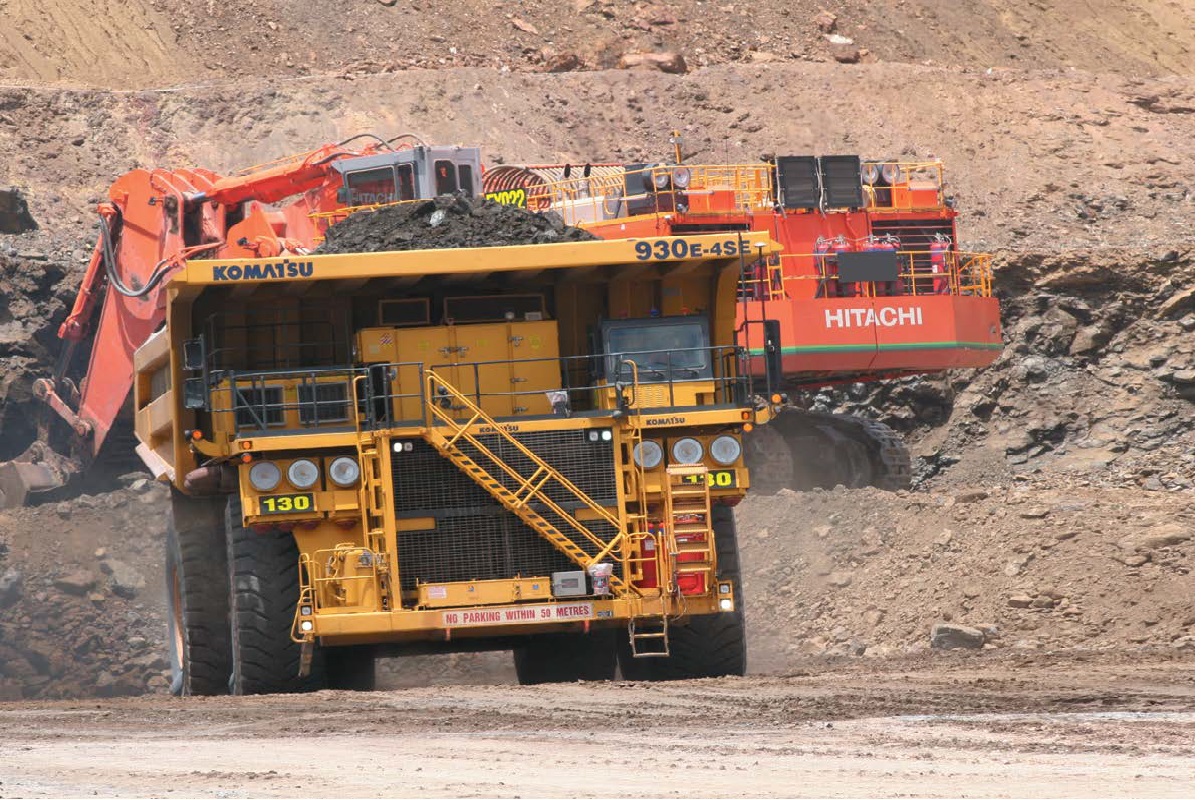
Today, Clermont produces around 12 million tonnes of high energy thermal coal a year, its mining fleet including 32 Komatsu 930E and 830E haul trucks and seven Hitachi excavators, all Cummins-powered.
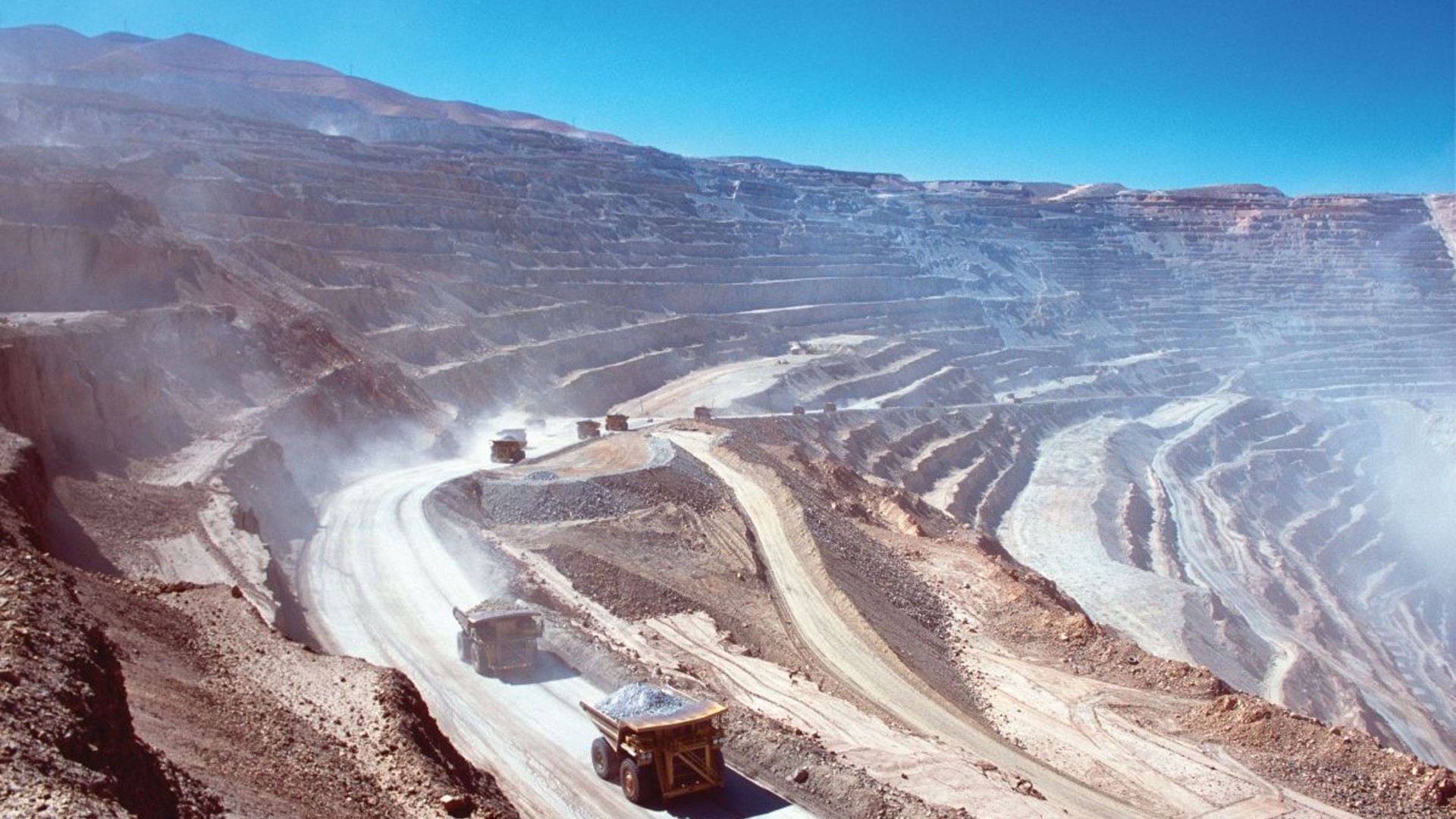
Clermont was the first mine in Australia to use the Cummins QSK78, a 78-litre V18 rated at 3,500 hp which was specified in the Komatsu 930E-4SE trucks to ensure good ramp speed out of the pit which today has a depth of 280 metres.
One of the constants at the mine since its early days – May 2008, in fact, when the first dirt was moved at Clermont – has been the bushy-bearded Cummins technician John Juett who began his career with Cummins as a 16-year-old apprentice in Adelaide in 1984.
As his career developed and his thirst for new challenges was ever-present, Juett forged a highlight of his working life when he took on a three-year stint at the remote Zhungeer Heidaigou coal mine in Inner Mongolia (China), where around 140 pieces of Cummins powered equipment operated in temperatures as severe as -35°C.
Global miner's recognition for Cummins site manager
The most time he has spent in any one role – 11 years – is his current position as Cummins site manager at Clermont where the maintenance regime he put in place has earned the recognition of global miner Glencore which began operational management of the mine in 2014. Prior to that, Rio Tinto managed the Clermont operations as majority shareholder.
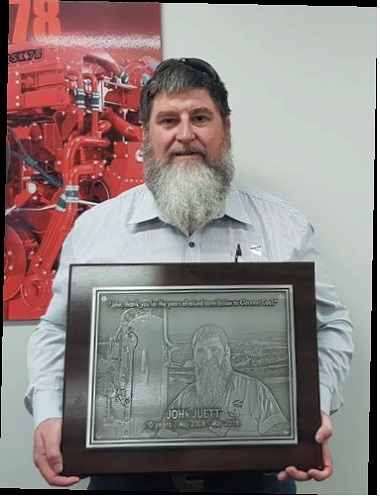
The beautifully crafted plaque presented to Juett last year after 10 years at Clermont stated simply: John, thank you for the years of valued contribution to Clermont Coal.
“This is a true testament to JJ’s passion for Cummins, his team and his customers,” says Chris Bugeja, regional branch manager for Cummins South Pacific. He notes that John’s work-life balance has been “challenged” at times while he and wife Sue have had to raise four young sons while John was living between Clermont mine and home in Emerald.
Juett obviously takes a lot of pride in what has been achieved at Clermont. “I really enjoy the challenge of working with our customers to achieve better results,” he says, adding: “The success of the Clermont project would not have happened without the support of the Cummins Mackay and Emerald branches. A special mention to the team running the Mackay workshop – Tony Walker, Brett Pokarier and Scott Sleeman – and the excellent support they provide.”
He’s also quick to acknowledge the team of six technicians who work at site and take pride in their work while providing a combined 155 years of Cummins service – Jeff Martin, Glen Westbury, Russell Cubley, Nathan Kennedy, Tim Allen and Tim Pratt.
Reduced engine life cycle costs
A high level of reliability plus longer life-to-overhaul is being achieved with the Cummins QSK engines in the haul truck and excavator fleet at Clermont. Reduced life cycle costs are the bottom line.
The 3,500 hp Cummins QSK78 is the muscle behind 17 Komatsu 930E-4SE haul trucks with their 290-tonne payload capacity, while two Komatsu 930E-4 units are powered by 2,700 hp Cummins QSK60 engines with modular common rail fuel system (MCRS) technology.
The Komatsu 830E fleet totals 13 units, with Cummins QSK60 HPI engines rated at 2,500 hp keeping the trucks rolling with their 220-tonne payloads.
“The original life-to-overhaul target for the QSK78 was 22,500 to 25,000 hours but we are now achieving 28,000 hours. All that’s done at mid-life is belt tensioner replacement and flushing the cooling system. Most turbochargers go full life,” John Juett points out.
“With the QSK60 HPI engines, life-to overhaul has been 28,000 hours but we’re now targeting – and achieving – 30,000 to 32,000 hours. Turbochargers, injectors and belt tensioners are changed out at mid-life.”
Eliminator oil filtration extended service intervals
He points out that all Cummins engines at Clermont are fitted with the Eliminator oil filtration system that replaces the engine’s standard spin-on filters. “Eliminator assists with extended service intervals and longer engine life,” says Juett. Oil change intervals were originally 500 hours but are now 850 to 900 hours based on six-week calendar servicing.
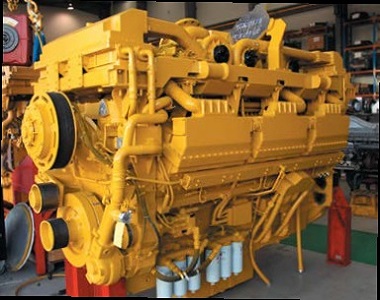
Life-to-overhaul of the excavator engines at Clermont has also seen increases under Juett’s watch.
The Hitachi EX5500-6 and EX5600-6 excavators – each with dual Cummins QSK50 MCRS engine installations – are a good example. The dual 50-litre V16 Cummins engines deliver a total 2,800 hp in the EX5500 which has an operating weight of 522 tonnes, and 3,000 hp in the EX5600 which operates at 537 tonnes.
“We were initially targeting 16,000 hours with the QSK50 but that has progressed to 22,000 hours and we’re now upping it to 24,000 hours,” Juett points out.
The 1,944 hp QSK60 MCRS engine in the EX3600-6 started out with a life-to-overhaul of 18,000 hours but that has now increased to 22,000 hours.
“The support we provide at Clermont is duplicated across multiple fleets and mine sites in the Bowen Basin,” says Chris Bugeja. “We’re proud of our people who provide this exceptional support. The passion and technical expertise of the teams at Cummins Mackay and Cummins Emerald is the reason for the strong growth of the Cummins engine population in the Bowen Basin.”
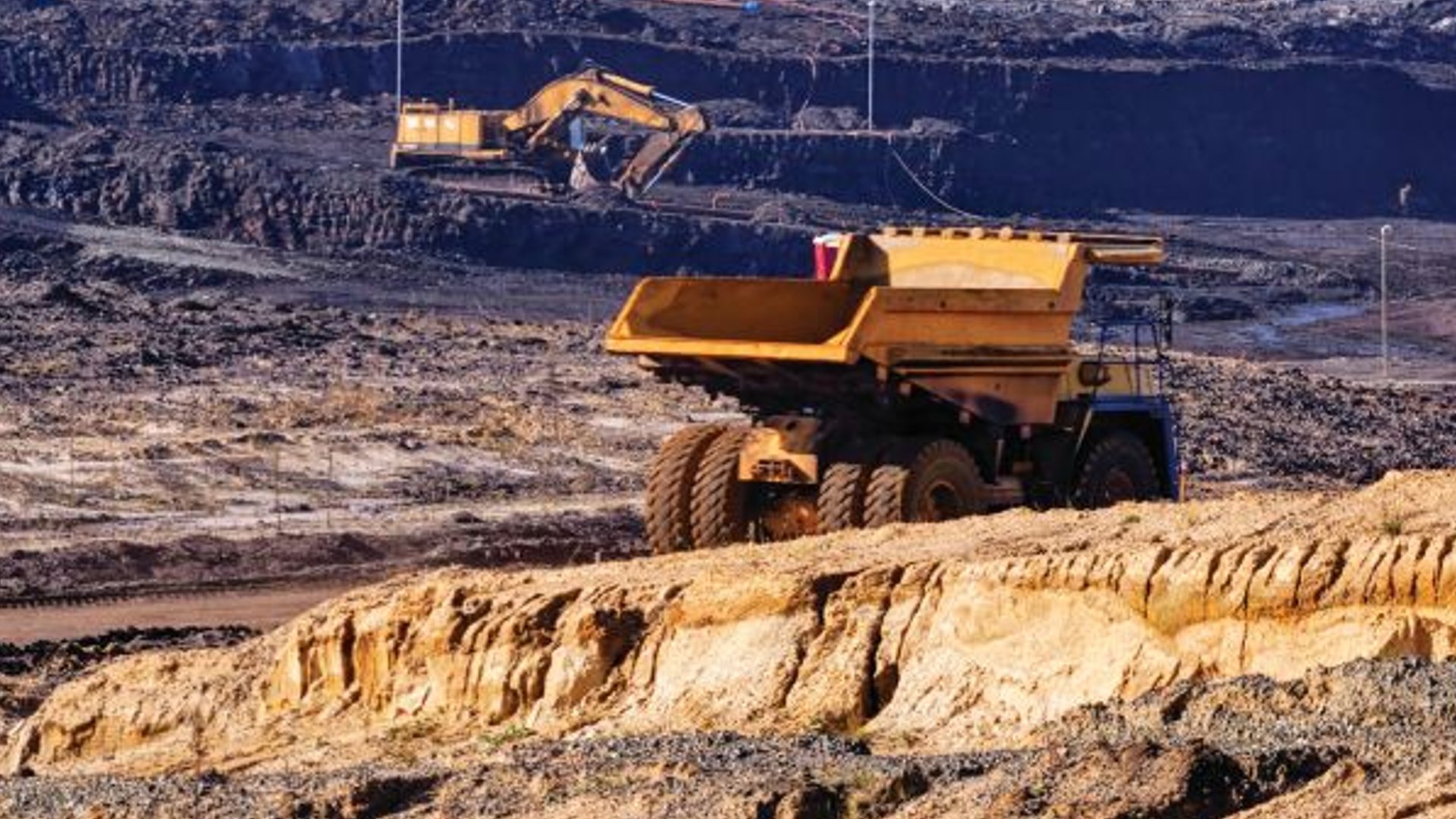
PrevenTech used to extend oil and filter life while ensuring engine health.
PrevenTech’s advanced analytics helped identify root causes of slow speeds and recommended optimized maintenance actions.
PrevenTech’s predictive analytics detected early signs of injector wear to help prevent injector failures.