Historical innovation makes full circle
Cummins celebrates Jacobs Vehicle Systems and Clessie Cummins’ revolutionary Jake Brake® compression release brake system
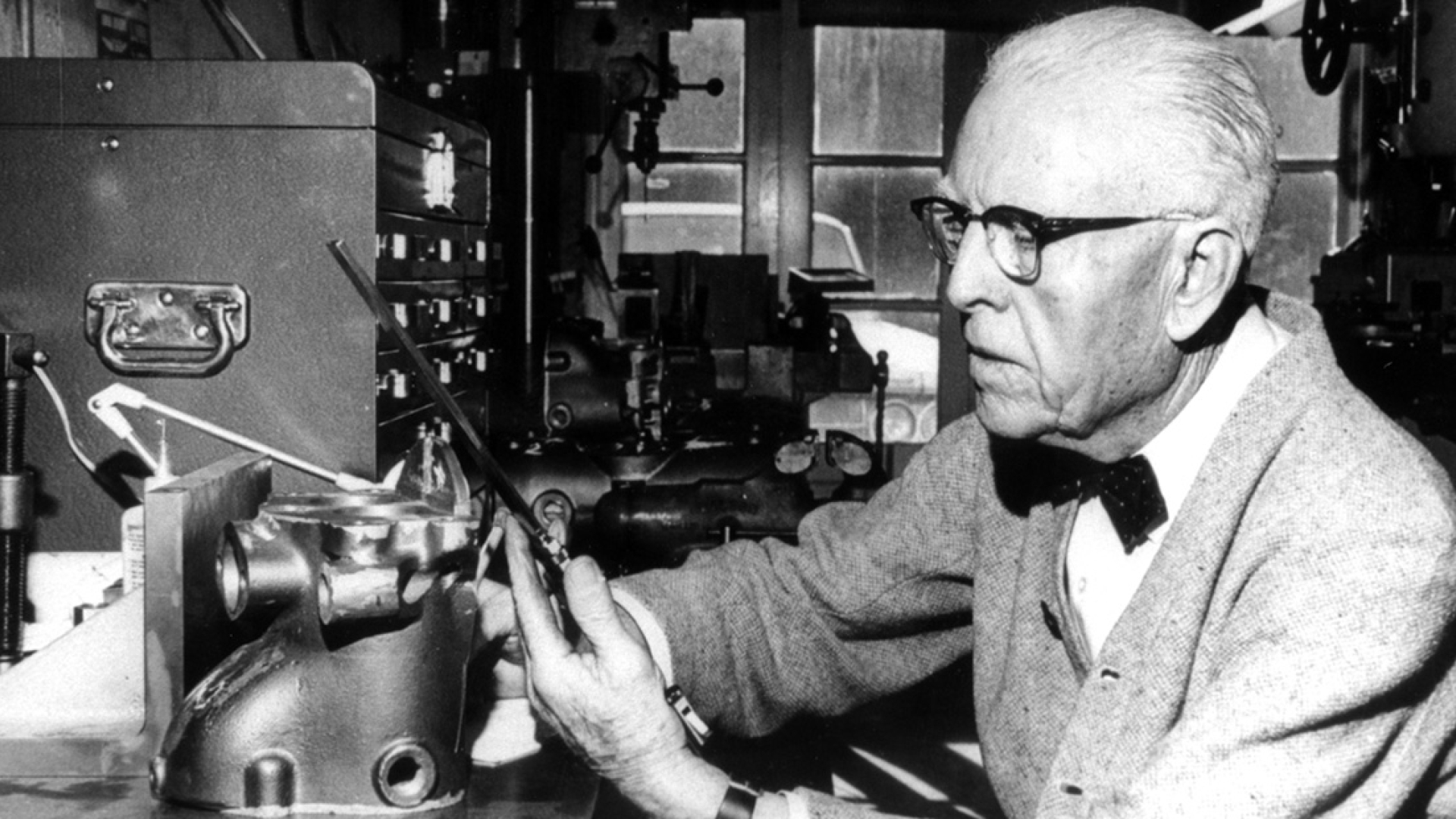
In April 2022, Cummins Inc. announced the acquisition of Jacobs Vehicle Systems (JVS), a supplier of engine braking, cylinder deactivation, start and stop and thermal management technologies. Not only did this addition to Cummins’ vast portfolio of advanced technology for engines bring ownership of JVS’s new technologies to the company’s current and future advanced engine platforms, it allowed Cummins to finally acquire ownership of Clessie Cummins’ very own invention from the 1950s, the Jake Brake®.
A compression release brake system, the Jake Brake is a device that turns an engine into a retarder. It converts the engine into an air compressor, helping truckers slow down their vehicles by shifting stopping energy from the brakes and converting that energy into hot air released through the exhaust. The Jake Brake allows a faster and more efficient slow-down processing, something Clessie Cummins was in dire need of some ninety years ago on his hazardous journey down a California hill.
Innovation inspired
In 1931, Clessie Cummins and two colleagues took off from New York in a diesel-powered truck outfitted with bunks, storage, a stove and the No. 8 Cummins Diesel Special race car. The intent of the cross-country journey to Los Angeles was to test the endurance and cost efficiency of diesel trucks while breaking a speed record for such a trip – trailblazing the way for every long-hauler since. The downside was the trip almost cost Cummins and his team their lives. The upside was not just proving diesel engine efficiency, but the experience sparked Clessie’s inventive mind with the idea of what would become known as Jake Brake. Clessie’s future invention would lead to a major contribution to greater control and safer operation of heavy trucks worldwide.
When Cummins reached Cajon Pass, west of San Bernandino, California, the truck started a frightening descent down a winding gravel road, 3,777 ft. above sea level. Crisscrossed by a busy mainline railroad, a train was visible at the downhill crossing. Much to Clessie’s chagrin, the brakes on the truck wouldn’t hold. Running in third gear, he tried to lower speed, but it wasn’t happening. With a freight train cutting across the path of the truck, its red lights luckily cleared the road just as the truck reached the tracks, nearly t-boning the caboose and escaping certain death by only inches.
Innovation realized
That event made a lasting impression on Clessie, who thought about it for many years. In 1955, he retired from Cummins and began exploring what he could do to turn his engine into an effective brake system. That same year, twenty-four years following the adventurous trip West, Clessie addressed the engine retarding issue with a solution. He also enticed his youngest son, Lyle, a graduate mechanical engineer, to join forces and form Cummins Enterprises Company, where they invented Jake Brake, later patented in 1965.
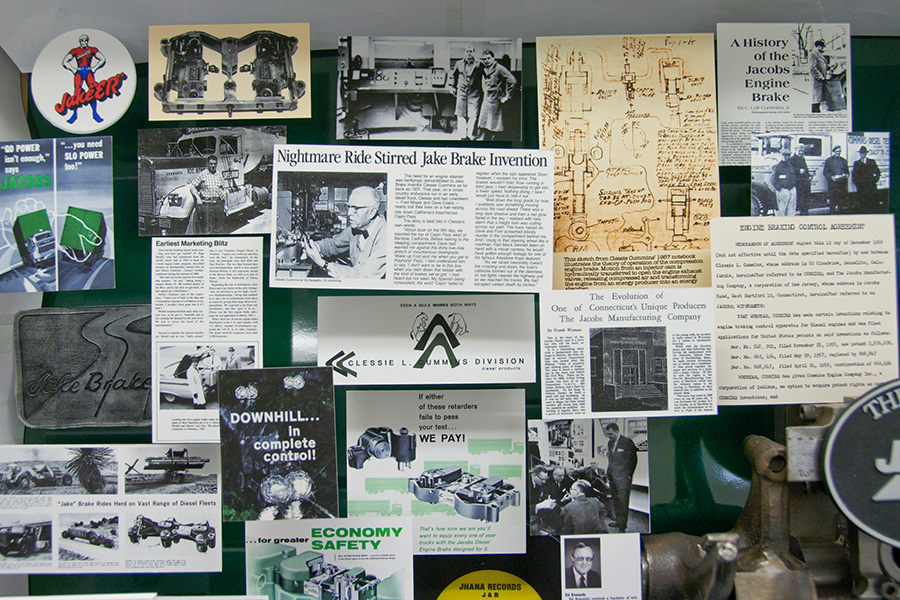
Unsurprisingly, the first place Clessie went with his invention was Cummins Engine Company, however, the leadership at the time passed on the opportunity. It was the Jacobs Manufacturing Company that Clessie then approached, entering into an agreement in 1959. Following the successful testing of the brake on numerous trucking companies, the Clessie L. Cummins Division at Jacobs was created to manufacture engine brakes. Lyle even went to work at Jacobs as did Clessie's brother, Donald, former chief engineer at Cummins who had retired from the company. Production began on the first engin brakes for the Cummins NH series engine in 1961.
Innovation powering success
Jacobs Vehicle Systems included roughly 600 employees, more than 60 years of engine retarding and valve actuation experience, and more than nine million engine brakes produced for the commercial vehicles industry, prior to Cummins’ acquisition. Jacobs officially became part of Cummins Turbo Technologies with the acquisition and now resides in Cummins Engine Components within the Cummins Components Business Segment.
When Cummins finalized the acquisition of JVS, Lyle Cummins was so pleased that the Jake Brake was finally where his father initially intended it – amongst the historical innovations at the company Clessie Cummins started back in 1919. Lyle was a huge supporter of the Cummins Heritage Center and immediately sent the original patent to Jennifer Rumsey, Cummins Chair and CEO. He was quite pleased that Cummins’ first female CEO was Columbus-born, just as he was. The original Jake Brake patent is currently on display at the Cummins Heritage Center along with other Jake Brake-related items, including the 10 millionth Jake Brake.
Cylinder deactivation and other Jacobs technologies are key components to meeting current and future emissions regulations. The acquisition of JVS allows Cummins to better integrate these important technologies into the company’s emissions-leading medium and heavy-duty engines, advancing Cummins’ path to zero emissions strategy – Destination Zero – to achieving net-zero carbon emissions by 2050.
Cummins, vision is to innovate for its customers to power their success. Visit Cummins.com to learn about the company, products, people, culture and more!
Did you know?
The very lathe Clessie Cummins used at his California home to invent the Jake Brake currently sits in the corner of the lobby of Cummins Technical Center office building, amid the models of classic Cummins engines through the years. The machine is slightly bigger than what you might see in a hobbyist’s home workshop today and was able to help the historic inventor create the component that has helped trucks safely traverse mountain roads for more than 60 years.
Author Profiles